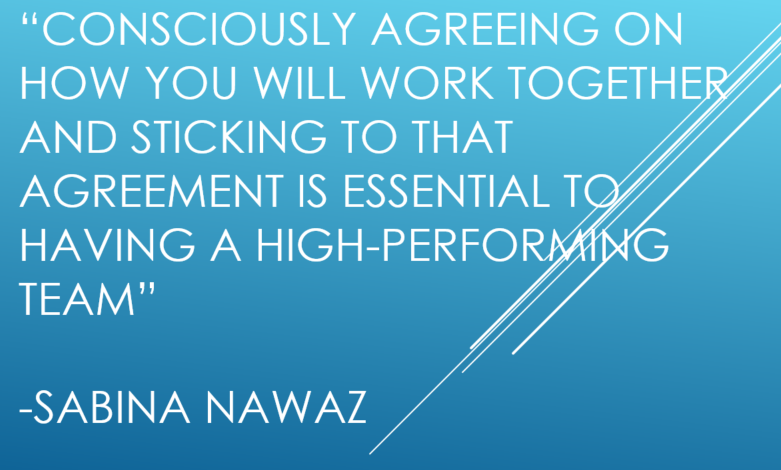
In our last installment, we discussed 3 Concepts of Team Building. Now let us dive into the 4 Characteristics of an Effective Team. SEFTOA challenges you to examine each concept and ask yourself if it is being applied to your current program.
1. Clarity of Purpose- Clearly defined purpose and goals must be established and maintained. Understand how your training programs fit into the agency and what added value the program offers the organization.
Often our training programs get focused on simply training new hires to be good employees with a knowledge base where they can function and contribute to the goals of the agency. Though this is certainly a core purpose, I want to challenge you to think beyond that. For example, can the training program affect hiring and retention increasing the likelihood of attracting more successful applicants? Is it feasible to examine the reasons why officers are failing out or not performing to standard and circle back around to your hiring and recruitment divisions to improve the quality of new hires? Define your training purpose then look beyond to what areas of your agency’s training can impact.
2. Good Communication- Open and honest communication must occur both within your teams and with the larger organization. Keep your trainers, informed motivated, and focused.
This may seem like an obvious one but I challenge you to examine your programs and see how much positive communication really happens. Communication in your programs includes clearly established roles, future goals, and plans, and developing standard operating procedures and protocols.
3. Accountability and Commitment- Members of the team are held accountable for their performance. Members understand their role and are committed and provided the training and resources needed to accomplish their goals. Members are rewarded for both individual efforts and team contributions.
Do you hold trainers accountable if a new hire is released from your program and performs poorly? Do you examine the work product of your trainers? Trainers should be evaluated on their effectiveness as a trainer. They should also be committed to producing high-functioning officers/deputies and given the training and resources to accomplish that mission. Also, members of a team need to be encouraged, motivated, and recognized not only for individual achievement but also for their contribution to the team. This promotes a team culture.
4. Shared Leadership- Effective teams allow members of the team to take on leadership roles.
Training coordinators should delegate tasks to team members. Whether that is updating policy and procedure, finding new and innovative ways to train, or simply sharing specialized knowledge and skills with the team. Shared leadership = Shared Responsibility. It increased morale and overall team performance.
Whether you are a team member or a team leader, a coordinator or trainer, an officer or a deputy, you need to foster positive group dynamics based on trust, respect, honesty, and appreciation. When focused on team culture, though conflicts will still arise, it will be focused on productivity.
If you liked this article check out our previous one on Team Characteristics. For access to more content become a member of SEFTOA at SEFTOA.ORG or email [email protected].
Adapted from Collective Impact: The Role of Teams and Teamwork, Mark Brittle, Johns Hopkins University.

Leave a Reply
You must be logged in to post a comment.